
KUKA KR 20 R1810 / KR 20 R1810-2
Dust & Abrasion Protection
for Industrial Robots
Protection against dust, abrasive particles and surface wear —
engineered for flexible multi-axis robot movement.
Protection for Demanding Machining Environments
Designed for KUKA KR 20 R1810 and KR 20 R1810-2 robots operating in dusty and abrasive industrial environments.
The protective cover helps shield the robot surface, joints and exposed components from grinding dust, fine particles, metal chips and general process contamination generated during machining and material-removal operations.
Typical Applications
Material Handling · Machine Tending · Machining · Grinding · Deburring
Protection Focus
Dust · Abrasive Particles · Metal Chips · Industrial Contamination
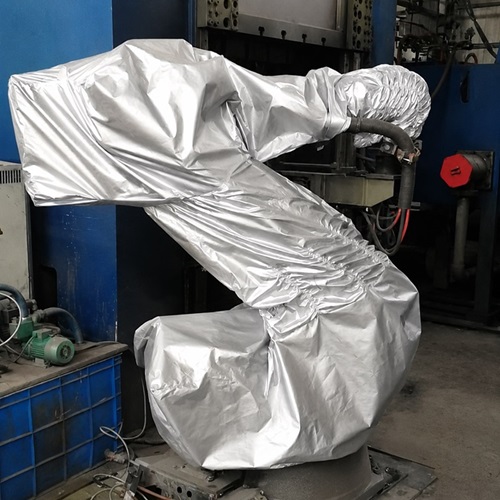
Robot
KUKA KR 20 R1810 / KR 20 R1810-2
Robot Variant
Standard
Robot Protection Rating
IP65
Typical Processes
Handling / Machining / Deburring
The large working envelope and extensive joint movement require the protective cover to provide sufficient flexibility without restricting robot motion.
Designed Around Robot Motion
A robot cover is not simply shaped around the robot's static dimensions.
During operation, the KR 20 R1810 moves through multiple rotating and articulating axes.
The protective cover therefore requires controlled fabric allowance and flexible sections around critical joints.
The cover design combines:
01
Motion allowance
Additional material is positioned
around moving joints to accommodate articulation.
02
Elasticated joint sections
Gathered elastic sections help
distribute fabric during repeated robot movement.
03
Controlled fit
The cover remains sufficiently close to the robot
while allowing the required range of motion.
04
Wear-zone consideration
Areas exposed to repeated folding, rubbing or process contamination
can be reinforced according to the application.
Engineering Details
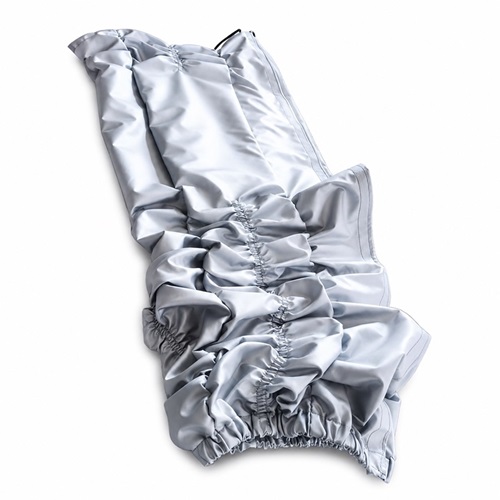
Two-Piece Construction
The protective system uses a two-piece construction designed around the geometry and movement of the robot.Dividing the cover into separate sections simplifies installation and removal while allowing each section to accommodate different movement requirements.
√
Key Advantages
· Easier installation and replacement
· Better control of fabric around moving joints
· Reduced excess fabric around moving joints
· Individual sections can be serviced or replaced
· Improved access for robot inspection and maintenance
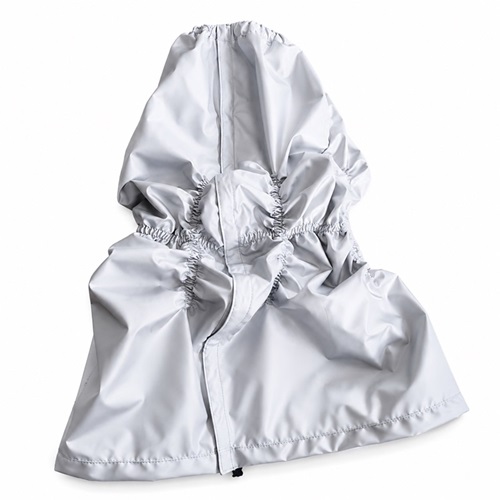
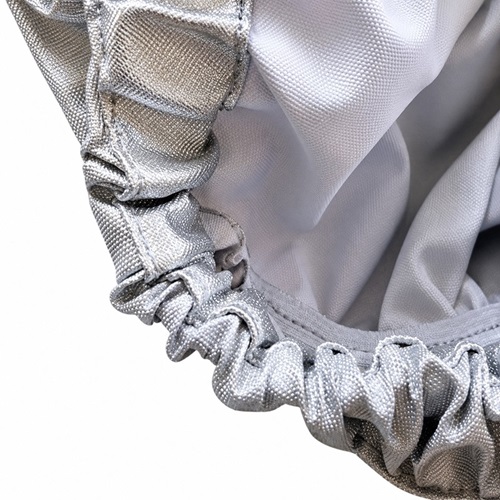
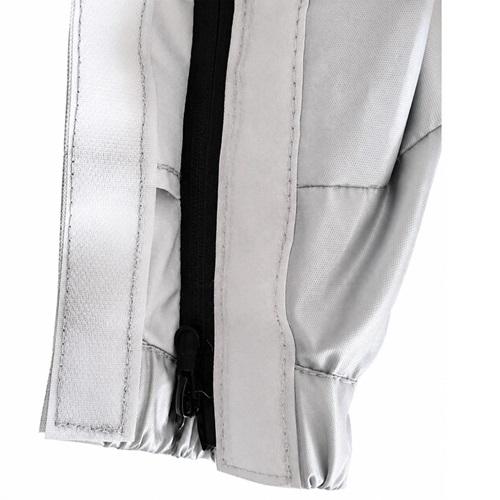
Elasticated Motion Sections
Integrated elasticated sections create controlled gathering around selected robot joints.Instead of allowing excess fabric to move freely, the elastic sections help manage the material as the robot changes position.
√
This design helps:
· accommodate joint articulation
· control excess fabric
· reduce uncontrolled fabric bunching
· maintain a closer fit around the robot
· reduce local pulling on seams and closures
Zipper + Hook-and-Loop Closure
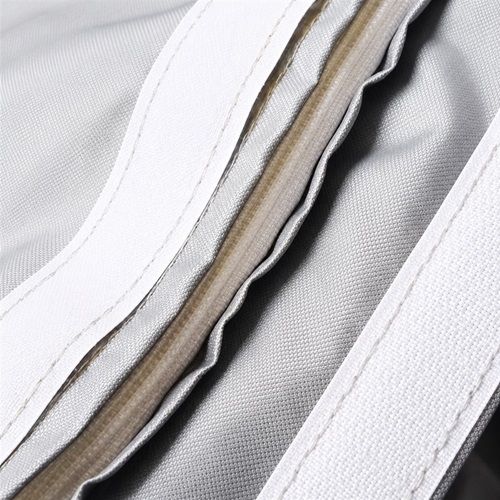
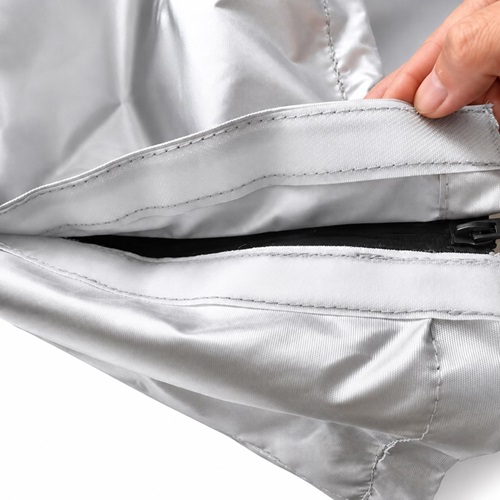
A combined zipper and hook-and-loop fastening system provides convenient access while helping keep the cover securely positioned during operation.
√
Zipper
· Provides a long opening for fast installation and removal of the cover.
√
Hook-and-Loop Flap
· Covers and secures the closure area and provides additional adjustment during installation.
· This layered closure concept combines service accessibility with practical protection for industrial environments.
Dust & Abrasion Protection
The cover is intended for robot installations where airborne particles and abrasive process residues can accumulate on the robot during production.
Typical Contaminants
Grinding Dust
Fine abrasive particles generated during grinding and finishing
Metal Chips & Swarf
Particles and small fragments produced during machining and deburring
Industrial Dust
Process dust that can accumulate around joints, cables and robot surfaces
Light Process Contamination
General residues associated with machining and material-handling environments
Material & Construction
Material selection is application-specific and depends on the actual process environment.
Typical design requirements include:
Abrasion Resistance
For repeated exposure to particles and mechanical contact
Dust Resistance
To reduce penetration and accumulation of process dust
Flexibility
To withstand continuous folding during robot movement
Tear Resistance
For demanding industrial operating cycles
Cleanability
To simplify routine maintenance and extend service life
Fatigue Resistance
For repeated flexing and folding during robot cycles
Application-Specific Engineering
Every robot installation is different.
Tooling, cables, fixtures, robot position, motion profile and contamination sources can change the requirements of the protective cover.
ROBCARE evaluates:
Robot Model
→
Process Environment
→
Motion Profile
→
Contamination
→
→
Material
Cover Structure
The final protective solution can be adapted according to the actual robot configuration and operating conditions.
KUKA KR 20 R1810 / R1810-2
Dust & Abrasion Protection for Handling, Machining and Deburring Applications
Robot Compatibility
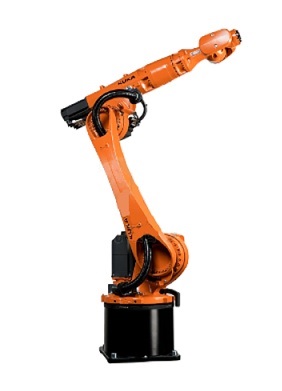
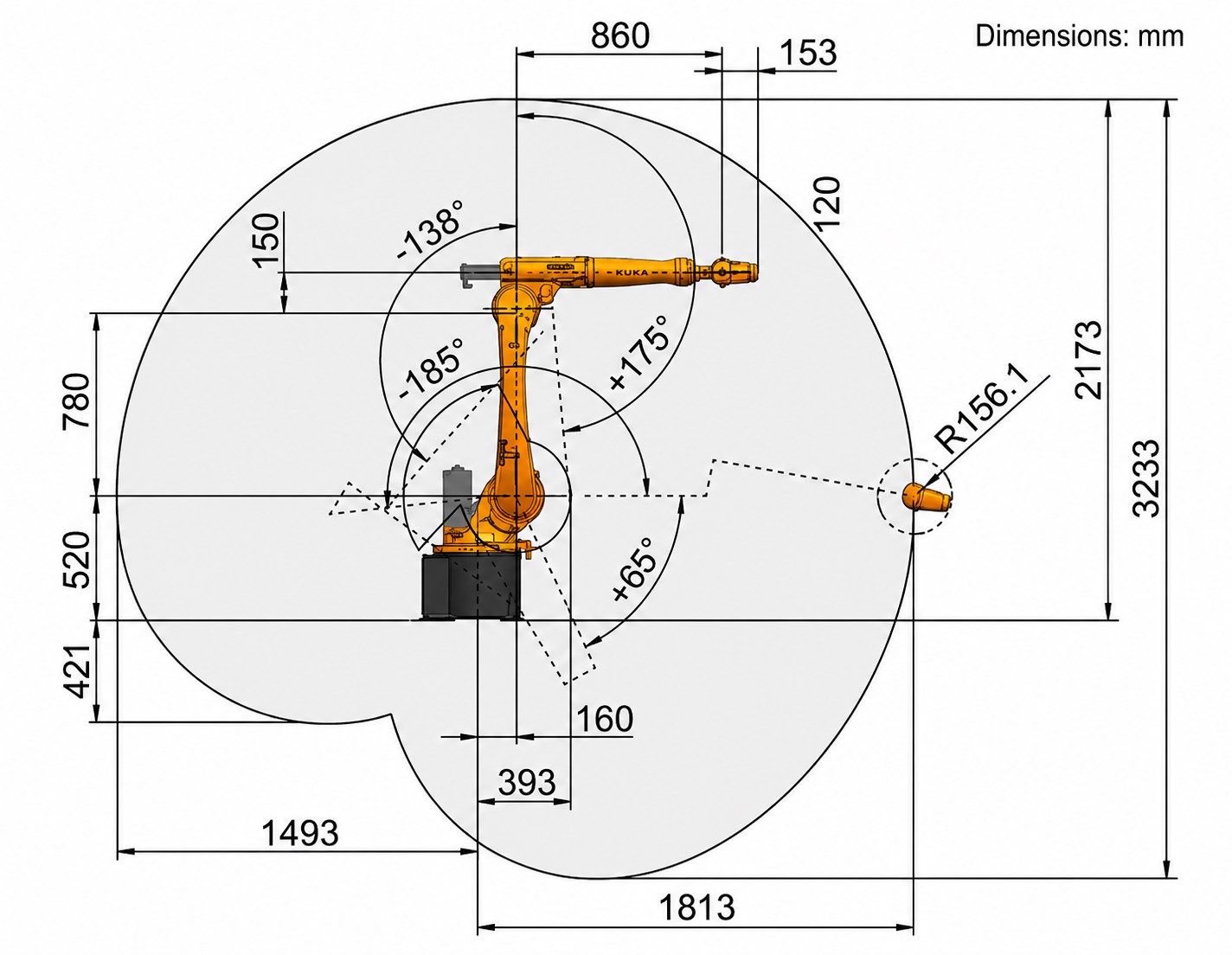
Reference geometry shown: KR 20 R1810
Manufacturer:
Series:
Model:
Payload:
Maximum Reach:
Axes:
KUKA
KR CYBERTECH
KR 20 R1810 / KR 20 R1810-2
20 kg
1813 mm
6
Other KUKA models and protection configurations are available.
HAVE KUKA KR 20 R1810 / R1810-2?
Tell us how your robot works.
Send us your robot model, application, working environment and a few photos of the robot installation. We will review the existing pattern and develop the appropriate cover configuration for your application.
Custom-engineered protective solutions
for industrial robots, end-of-arm tooling
and related equipment.
√ Application-Based Engineering
√ Custom-Fit Protection
√ From Concept to Production
Billrothstraße 2A-5-34,
1190 Vienna, Austria
Tel: +43 660 5657968
© 2026 EMEDEN. All Rights Reserved. | ROBCARE™