
Chemical-Resistant
Robot Covers
Custom-engineered protection for industrial robots exposed to chemical splash, cleaning fluids, moisture and corrosive process environments.
Chemical Resistance · Liquid Barrier · Flexible Motion · Custom Fit
ABB IRB 7600
Chemical Exposure In Automation
The Task Defines the Motion.
The Environment Defines the Protection.
Industrial robots used for material handling, machine tending and process automation may operate close to washing systems, chemical treatment lines and other aggressive production environments.Even when the robot performs a standard handling task, exposure to water, cleaning agents, process fluids, chemical splash or corrosive media may require additional protection.
Typical Environments:
Parts Washing
Water, cleaning fluids and process residues.
Chemical Cleaning
Cleaning agents, splash and moisture.
Surface Treatment
Chemical solutions and aggressive process media.
Chemical Processing
Corrosive fluids, mist and contaminated environments.
Protection in Demanding Chemical Environments
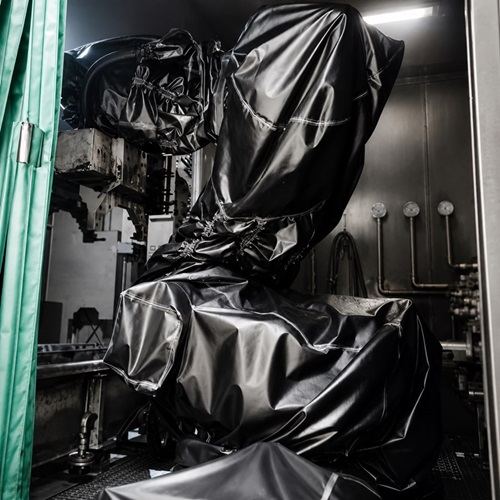
ABB IRB 7600 with protective cover in a demanding process environment.
Heavy-duty robots operating in washing, chemical processing or surface-treatment environments may be exposed to liquids, contamination and chemically aggressive media.
A custom protective cover provides an additional barrier around the robot body, articulated joints, cables and auxiliary lines, helping reduce direct exposure while maintaining the movement required by the process.
√
Protection Focus:
Chemical Splash
Process Fluids
Moisture
Contamination
Robot Body & Auxiliary Lines
Motion Engineering
Designed to Move With the Robot
Industrial robot joints create continuous changes in angle, length and surface geometry.
Protective covers therefore require carefully positioned movement allowance around articulated areas.
√
Controlled Flexibility
Gathered and flexible sections expand and contract with robot movement.
√
Reduced Mechanical Stress
Additional material is positioned where required to reduce excessive tension on the cover and seams.
√
Motion Compatibility
The cover geometry is developed around the robot's operating range to minimize interference with
normal movement.
Liquid Barrier Engineering
Protection Depends on More Than the Fabric
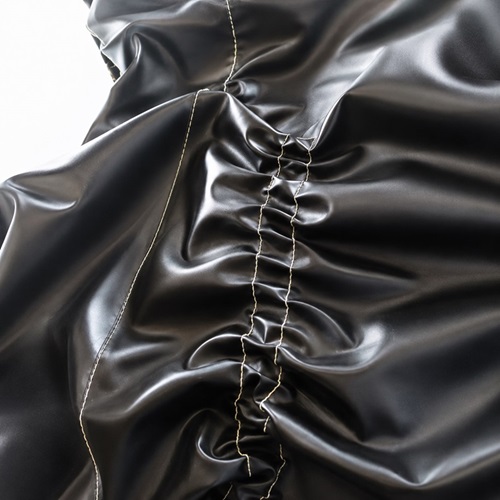
Chemical and liquid protection depends not only on material selection, but also on how the cover is constructed.
Stitched areas, openings and connection points require particular attention because they can become potential paths for liquid penetration.
√
Seam Sealing Design
Special internal seam-sealing treatment can be applied to critical stitched areas to help reduce
liquid penetration.
√
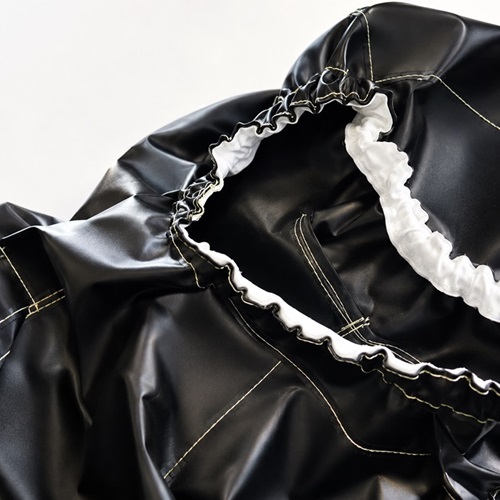
Secure Openings
Elastic closures, drawcords, straps or overlapping constructions can be selected according to
the installation position.
√
Controlled Interfaces
Critical openings are designed to balance sealing performance, installation access and robot movement.
Cover Construction - Engineered Around the Robot
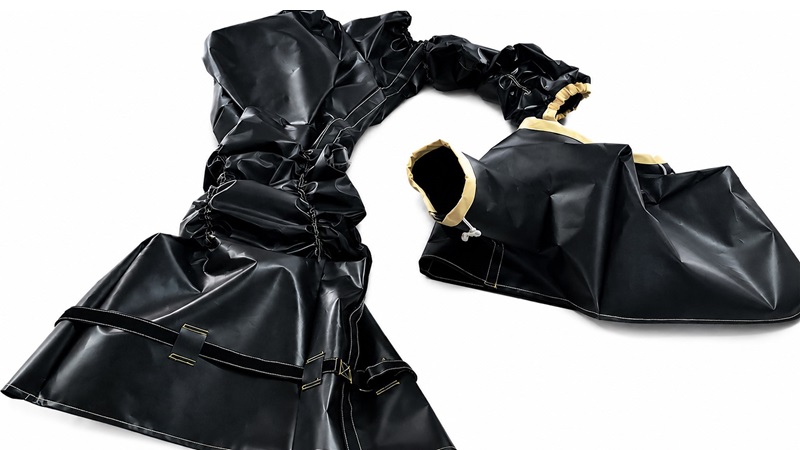
Construction Example — ABB IRB 1600-10/1.45
A robot protective cover is not simply a shaped enclosure.
Its geometry must follow the robot body while providing sufficient
freedom around articulated joints, interfaces and service areas.
Multi-Piece Construction
Separate cover sections can simplify installation, removal and maintenance.
Flexible Joint Sections
Gathered areas provide additional movement allowance around articulated axes.
Adjustable Closures
Elastic, drawcord and fastening systems help secure critical openings.
Strategic Fixation
Straps and attachment points help stabilize the cover during repeated robot movement.
Engineering Details - Small Details. Critical Performance.
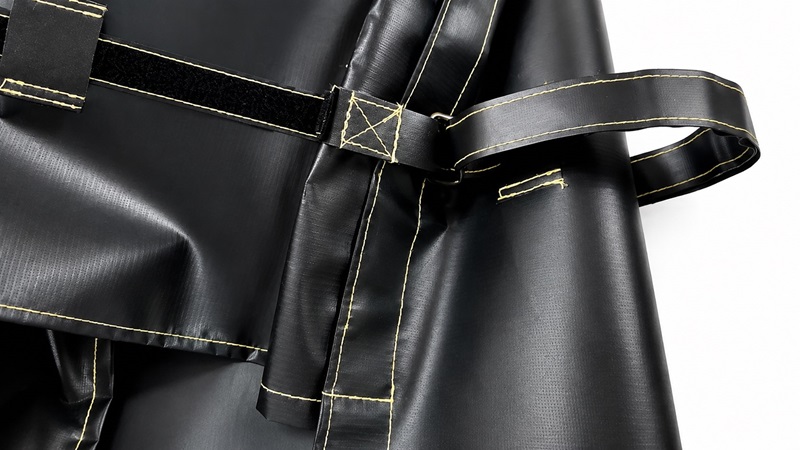
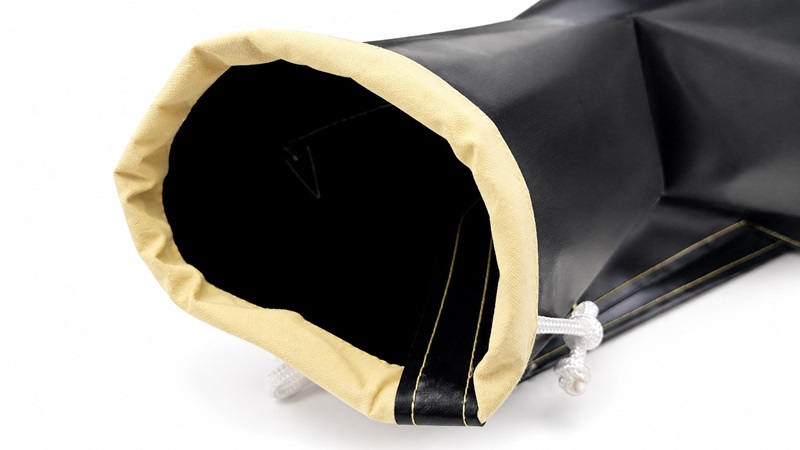
Movement Allowance
Flexible sections are positioned according to joint movement and required working range.
Openings and attachment points are designed for secure installation while allowing service access and repeated removal.
Closures & Fixation
FOUR DESIGN PRIORITIES
Built for Demanding Process Environments
01
Chemical & Liquid Barrier
Materials and construction are selected
according to the actual chemical and liquid exposure.
02
Flexible Motion Design
The cover follows robot articulation
without unnecessarily restricting movement.
03
Sealed Seam Construction
Critical stitched areas can receive
additional sealing treatment to reduce liquid penetration.
04
Serviceable & Reusable
Multi-piece construction can support easier
installation, cleaning, maintenance and replacement.
Material Selection - The Right Material Starts With the Process
ROBCARE evaluates the operating environment before defining the protective material.
Chemical Medium
What substances contact the cover?
Temperature
What are the process and ambient temperatures?
Mechanical Load
Is abrasion or repeated contact also present?
Concentration
At what concentration?
Exposure Type
Splash, mist, wash-down or continuous contact?
Cleaning Requirement
How will the protective cover itself be cleaned?
√
Important
Final material selection should be verified against the customer's actual chemical exposure and operating conditions.
Tell Us What Your Robot Is Exposed To.
Provide the robot model and basic operating conditions. We will evaluate the application and develop a protection concept around the robot, movement and process environment.
ROBOT Model
Application
Chemical Medium
Concentration / Temperature
Photos / 3D Data
Custom-engineered protective solutions
for industrial robots, end-of-arm tooling
and related equipment.
√ Application-Based Engineering
√ Custom-Fit Protection
√ From Concept to Production
Billrothstraße 2A-5-34,
1190 Vienna, Austria
Tel: +43 660 5657968
© 2026 EMEDEN. All Rights Reserved. | ROBCARE™