
Thermal Management
Climate-Controlled
Robot Protection Systems
Thermal protection for industrial robots operating in cold storage,
sub-zero environments and other temperature-critical conditions
ROBCARE combines insulated protective covers, active heating and
temperature monitoring to help maintain stable operating conditions around industrial robots.
Reliable Robot Operation in Extreme Cold
Industrial robots operating in cold storage, refrigerated facilities or severe winter conditions can be exposed to temperatures around −30°C or below.
Low temperatures may increase lubricant viscosity, affect robot motion and create freezing risks for fluid lines and
auxiliary components.
Thermal protection helps create a more stable micro-environment around the robot.
Down to −30°C*
Extreme cold environments
Active Heating
Controlled thermal compensation
Temperature Monitoring
Adjustable operating conditions
* Application temperature depends on robot model, system configuration and project requirements.
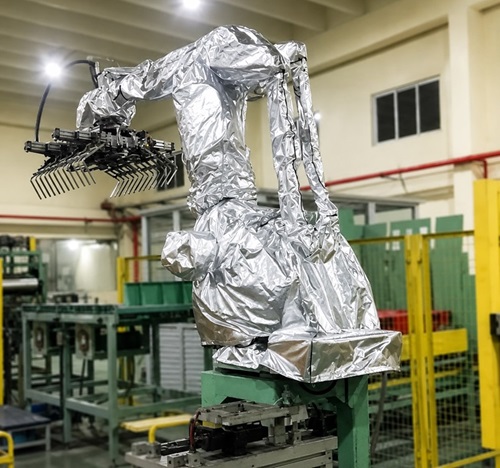
Active Temperature-Controlled Protection
ABB IRB 660 · Handling & Palletizing
Multi-layer insulated protective cover combined with an electrically powered heating system and adjustable temperature control.
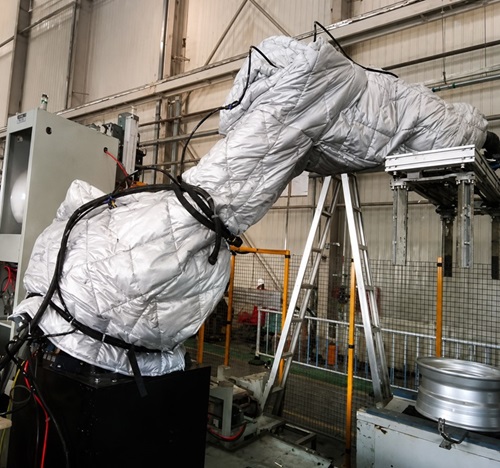
Heated Quilted Insulation
KUKA KR 210 R2700-2
A quilted multi-layer construction provides increased thermal insulation while retaining sufficient flexibility for articulated robot movement.
√
Key Features
Active electric heating
Thermal insulation
Temperature monitoring & adjustment
Wind and dust protection
Water-resistant construction*
Designed for low-temperature operation
* Performance depends on material configuration, seams and closure design.
√
Key Features
Quilted thermal insulation
Integrated heating
Temperature control
Heat-retention structure
Flexible joint accommodation
Customized fit for robot motion
.
Intelligent Temperature Control
Controlled Heat. Stable Operating Conditions.
Temperature sensors monitor conditions within the protective system. The controller regulates the heating output according to the selected temperature setting, helping maintain a stable thermal environment around the robot.
Temperature Sensor
↓
Temperature Controller
↓
Heating System
↓
Insulated Protective Cover
↓
Stable Robot Microclimate
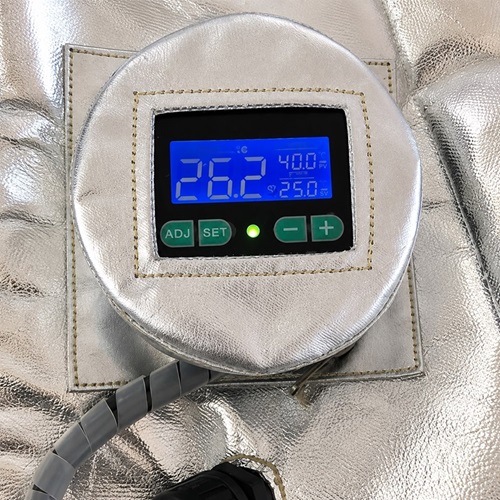
System Architecture
More Than a Protective Cover
A complete thermal protection system can integrate multiple functional components according to the operating environment and robot configuration.
01
Protective Cover
Custom-fitted around the robot geometry and motion envelope.
02
Thermal Insulation
Reduces heat loss between the robot and surrounding environment.
03
Heating System
Provides active thermal compensation through integrated or external heating, depending on the application.
04
Temperature Sensors
Continuously measure temperatures at defined monitoring points.
05
Control System
Regulates heating according to the required operating temperature.
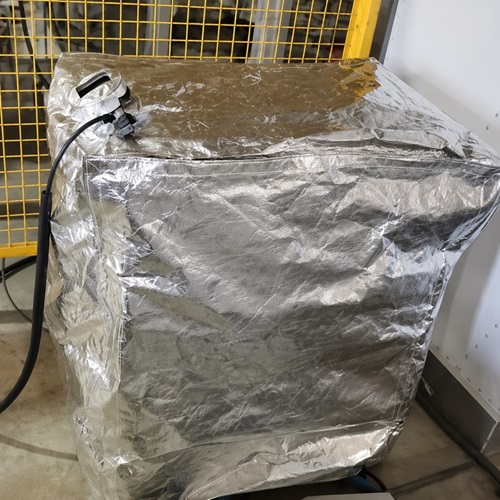
Integrated Heating & Temperature Control
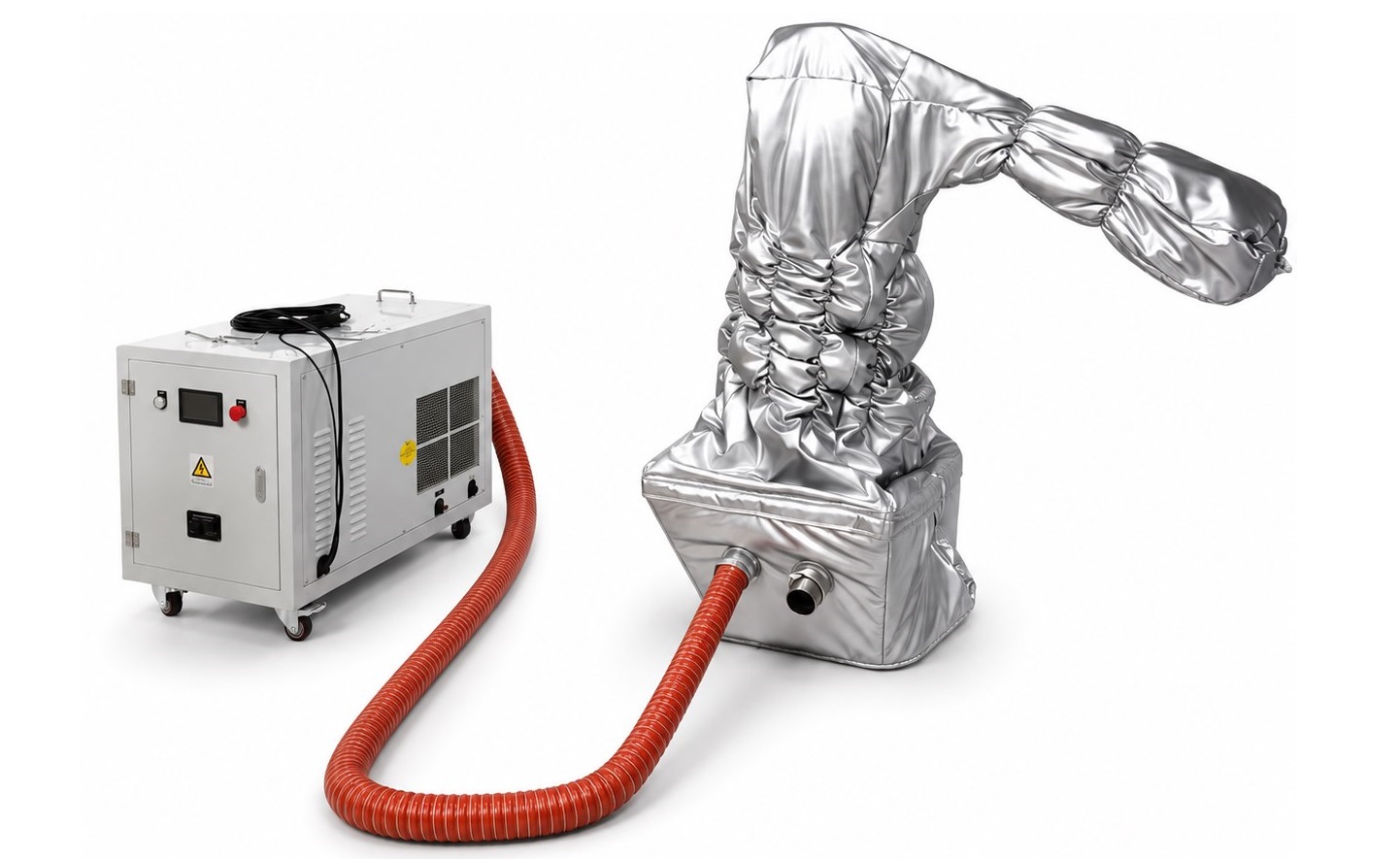
Depending on the application, the protective cover can be integrated with an external heating and temperature-control unit to provide conditioned warm air and maintain a more stable thermal environment around the robot.
√
External Heating & Temperature-Control Unit
Warm-air heating can be integrated with the insulated robot cover for rapid heating and controlled temperature maintenance.
Rapid Heating
Low-Temperature Operation
Stable Temperature
Control
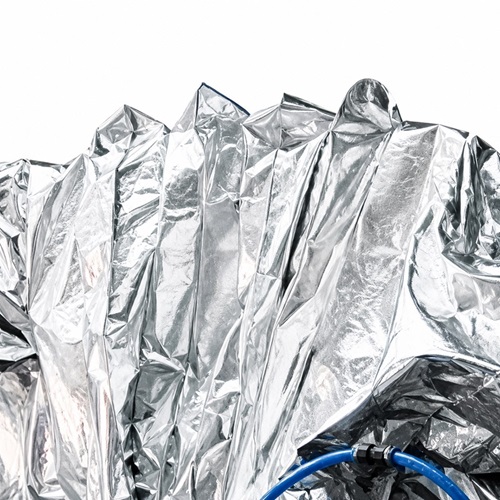
Composite Insulated Construction
Dense multi-layer construction designed to combine thermal insulation with environmental protection.
Potential properties depending on material configuration:
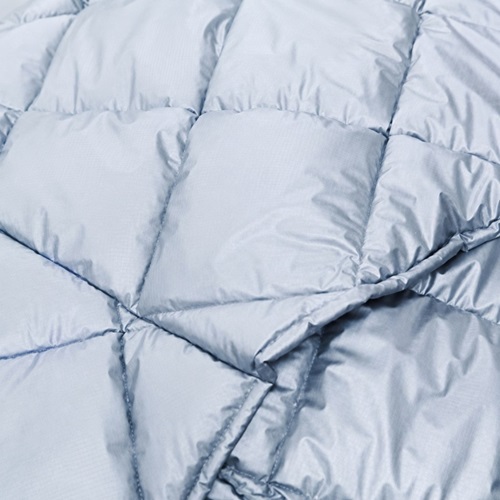
Quilted Insulation Construction
Multiple material layers are quilted together to stabilize the insulation and maintain uniform thermal protection during robot movement.
Potential properties depending on material configuration:
Thermal Insulation
Wind Resistance
Water Resistance
Dust Protection
Mechanical Strength
Thermal Insulation
Heat Retention
Flexible Construction
Motion Adaptability
.
Engineering Considerations
01
Ambient Temperature
Minimum operating temperature,
temperature fluctuations and exposure duration.
02
Robot Motion Profile
Joint movement, cycle frequency and motion envelope
influence cover geometry and heating-zone design.
03
Required Thermal Condition
The target is to maintain suitable operating conditions around
critical robot components rather than simply maximize heating temperature.
04
Heating & Insulation Configuration
Heating power, insulation thickness, sensor locations and
control strategy are configured according to the application.
√
Thermal protection is engineered as a system — not specified by cover material alone.
Engineered for Your Robot. Configured for Your Environment.
Every climate-controlled protection system is developed according to the robot model, operating temperature,
motion profile and environmental conditions.
Robot Model
→
Operating Environment
→
Thermal Requirement
→
System Configuration
Tell Us Your Robot and Operating Conditions.
Provide the robot model and basic operating conditions. We will evaluate the thermal requirements, robot movement and process environment to develop an appropriate protection concept.
Custom-engineered protective solutions
for industrial robots, end-of-arm tooling
and related equipment.
√ Application-Based Engineering
√ Custom-Fit Protection
√ From Concept to Production
Billrothstraße 2A-5-34,
1190 Vienna, Austria
Tel: +43 660 5657968
© 2026 EMEDEN. All Rights Reserved. | ROBCARE™